

An EV charger is a 240-volt circuit job before it is a hardware purchase: the breaker, the wire run from your panel, a City of Fort Collins electrical permit and an inspection, and a load calculation that says whether your service can carry the charger at all. Precision Service Electric installs Level 2 chargers across Fort Collins and does that calculation before quoting, so the number you get is based on your panel rather than a guess. Call 970-593-3190.
Home Charging in Fort Collins, Explained
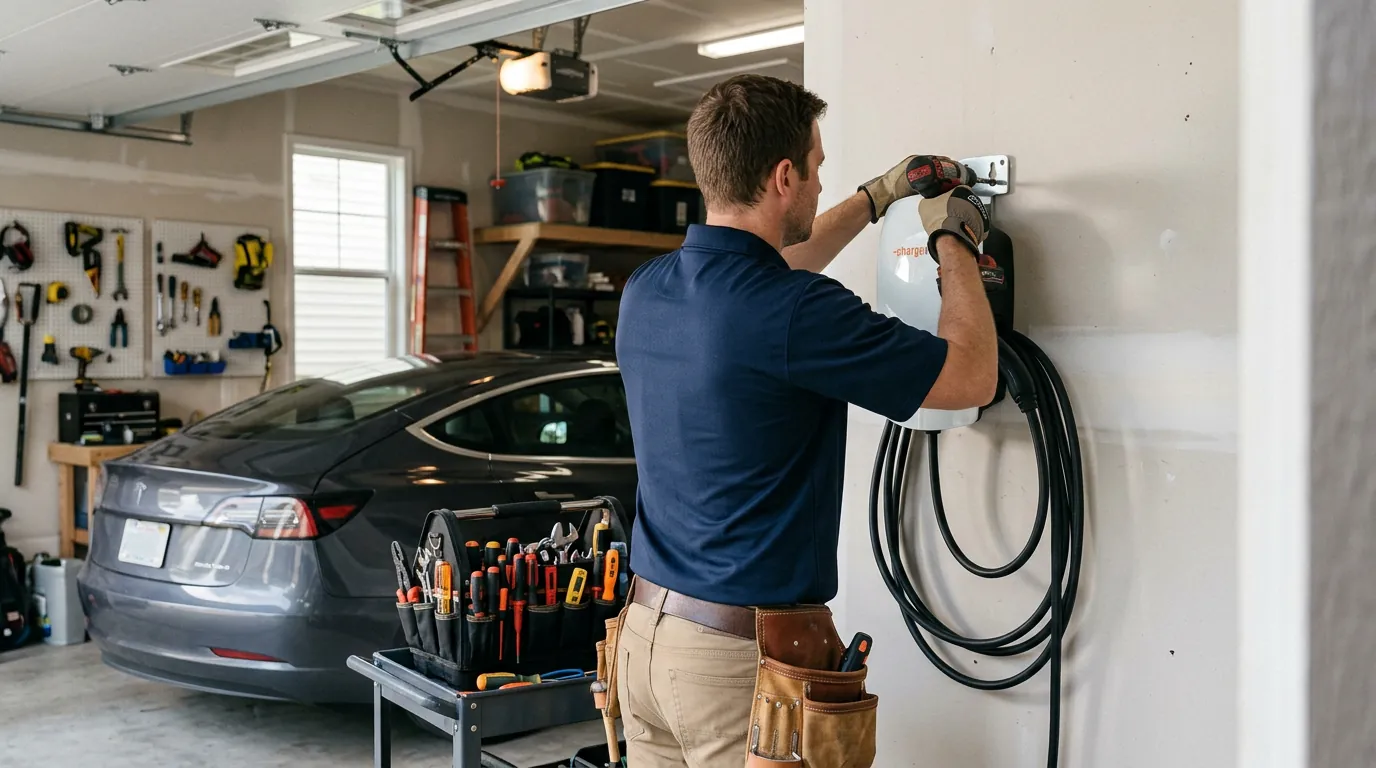
Charging at home is not the same product as public charging. A home charger is a dedicated circuit installed on your property, protected by its own breaker, wired to the place the car actually parks, and inspected. The cord that comes with the car is not that circuit.
What most Fort Collins households actually need is a Level 2 unit on a 240-volt circuit, installed where the car sits overnight. Everything else — the charger brand, the amperage, whether it is hardwired or plugged into a NEMA 14-50 outlet, whether the panel has room — follows from the panel and the parking spot, in that order.
Level 1 vs Level 2: What Actually Matters
What Level 1 Can and Cannot Do
Level 1 uses a standard 120-volt outlet and adds roughly three to five miles of range per hour. For a plug-in hybrid, or a driver covering under about 30 miles a day, overnight Level 1 genuinely covers the daily need. Recharging a large battery from low on Level 1 can take well over a day.
What a Level 2 Circuit Adds
Two hundred and forty volts converts a slow overnight top-up into a usable weekly rhythm: 25 to 40 miles of range for every hour plugged in, depending on the car’s onboard charger. That is what makes an EV practical for a household covering more than a short commute.
Why DC Fast Charging Is Not a Home Option
DC fast charging needs commercial-grade power that homes do not provide. Home charging is Level 1 or Level 2. The fast chargers on College Avenue are for road trips, not for your garage.
Power, Panels, and Circuit Size
How Much Power a Charger Needs
Home Level 2 chargers typically run on a 40- or 50-amp circuit, supporting about 32 to 40 amps of continuous charging; some hardwired units use a 60-amp circuit for up to 48 amps of charging. Continuous loads may run at no more than 80 percent of the circuit rating, which is why a 50-amp circuit supports a 40-amp charge rate rather than 50.
The Load Calculation Comes First
Before a charger circuit is sized, the existing load is calculated: square footage, major appliances, heating and cooling, range, dryer, water heater and existing large circuits. The charger is added to that picture. This is the step that separates an honest answer from a sales pitch, and it is the step a quote given over the phone skips.
If Your Home Has 100-Amp Service
A 100-amp service can often carry an EV charger, particularly with gas heat, a gas range and no hot tub. Electric heat or a heat pump plus electric appliances may leave no room for a 40-amp continuous load. The numbers decide, and they are different for every house on the block.
Panels With No Spare Capacity
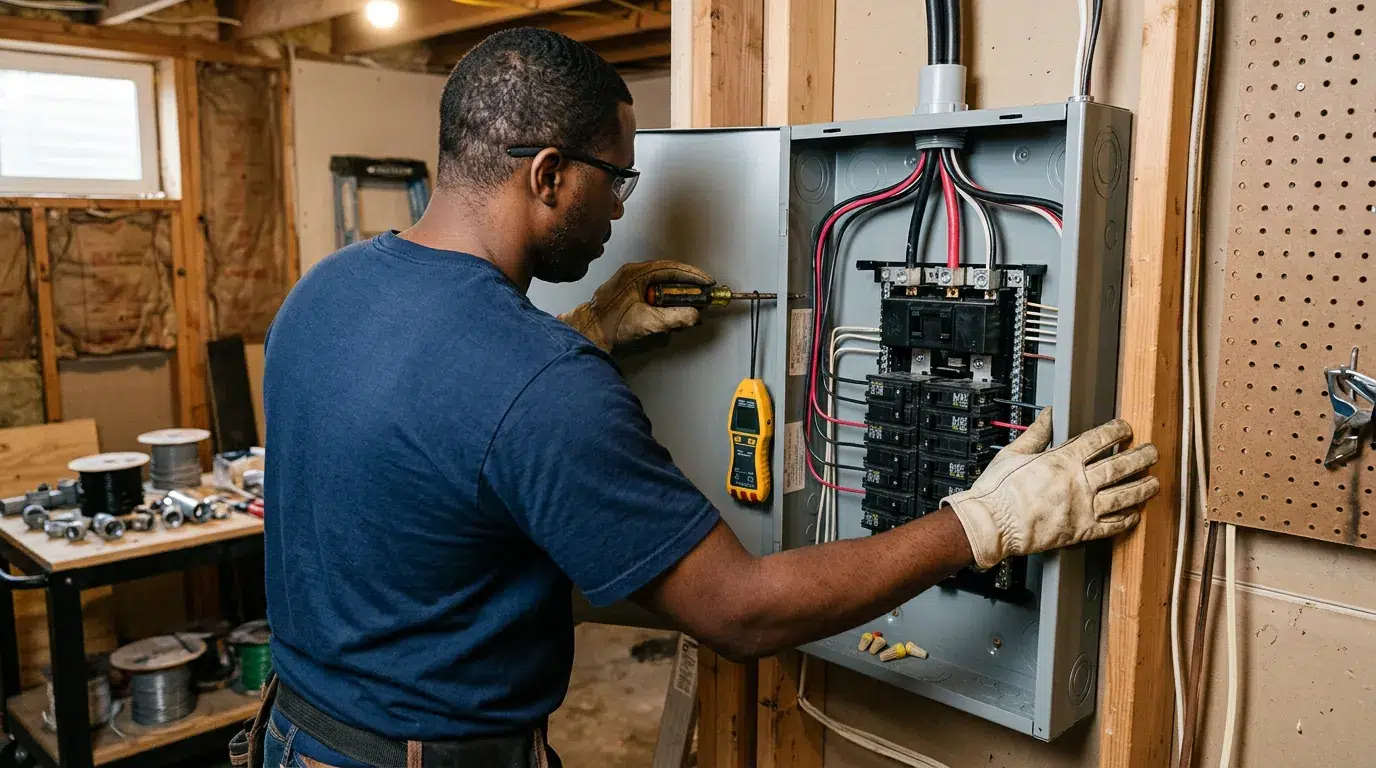
A 200-amp panel usually has room, but “usually” still needs the calculation: some older panels have space for a breaker and no capacity to spare. When the service cannot carry the load, the honest options are a service upgrade — a larger panel on its own does not raise service capacity — a lower-amperage charger, or load management where the code allows it.
Hardwired Charger or a 14-50 Outlet?
Hardwiring removes the receptacle from the circuit: the charger connects directly, can draw up to 48 amps on many models, and sidesteps the nuisance tripping that GFCI-protected outlets sometimes cause with EV equipment. A NEMA 14-50 outlet does the opposite — it keeps the unit movable and swappable without an electrician. Both pass inspection; the decision is whether the equipment stays put. Outdoor installations may still need ground-fault protection under the adopted code, settled at permit.
Permits and Inspection in Fort Collins
A new charger circuit is permitted electrical work in Fort Collins. City of Fort Collins Building Services issues the electrical permit and inspects the work, and the permit is what documents a compliant installation for a future buyer’s inspector. Permit questions route to the City’s Building Services office.
Precision Service Electric is licensed and insured under Colorado licence #3918, and the installation is inspected like any other new circuit.
Rebates, Rates, and What the Utility Decides
Fort Collins Utilities supplies electricity inside the city and operates public charging stations around the community at a flat $1 per hour, which is useful context for what charging costs away from home but says nothing about your own rate. Any residential rebate depends on the utility account, the equipment and the programme rules in force that year — the utility decides eligibility, not the installer.
Off-peak charging only saves money if the rate plan on your account has an off-peak window. Check the plan before counting on a savings figure.
What the Installation Involves
The work starts with what you drive, where it parks, your daily miles and whether a second EV is coming. Then the panel is inspected, the load calculated and the circuit path identified — through a garage wall, across a ceiling, or out to a detached garage. The installation sets the breaker, runs and protects the conductors, connects the equipment, tests the circuit and coordinates the inspection.
What EV Charger Installation Costs in Fort Collins
Published local pricing frames the market. King Electric lists $500 to $2,500 for a residential EV charging station installation in Fort Collins. Those are their published figures, not a Precision Service Electric quote.
The variables that set the number are physical: how far the cable has to travel, what it has to get through, whether the panel has room, hardwired versus receptacle, and indoor versus outdoor placement. A figure quoted before anyone has looked at the panel is not an estimate.
Serving Fort Collins and Northern Colorado
We install EV chargers throughout Fort Collins and the surrounding communities we serve from our Loveland shop: Loveland, Windsor, Berthoud, Johnstown, Greeley, Longmont, Firestone, Timnath, Severance and Eaton. The full list is on our Northern Colorado service area page.
When the charger circuit needs a panel that can carry it, we handle electrical panel replacement in Fort Collins. If the circuit is part of a larger project, see our basement electrical finishes page, and for the same service in the next city down, panel replacement in Loveland. If the charger circuit is going in during a lighting project, see lighting upgrades in Fort Collins.


“Bill and company installed an EV car charger at our home. Bill was great to work with. He was polite and on-time and did a great job. He explained the process thoroughly and showed his work along the way. Would definitely recommend and use again for work”
Request an EV Charger Quote in Fort Collins
Tell us the vehicle, where it is parked and when you are typically home. We look at the panel, work out the circuit size and give you the number before any work begins. Call 970-593-3190 or send us a message. Office hours are Monday through Friday, 7:00 AM to 4:00 PM.
Precision Service Electric is family owned, in business 30 years, licensed and insured under Colorado licence #3918, with a 4.8-star Google rating across 47 reviews.
Frequently Asked Questions
Do I need a permit to install an EV charger in Fort Collins?
Yes. A new 240-volt charger circuit is permitted electrical work, and City of Fort Collins Building Services issues the electrical permit and inspects the installation. The permit and the passed inspection are the record that the work was done to code — the document a buyer’s inspector will look for.
What does EV charger installation cost in Fort Collins?
King Electric publishes $500 to $2,500 for a residential installation in Fort Collins. That range covers ordinary runs and ordinary panels; long runs, finished walls, a detached garage or a panel upgrade push past it. Your number follows the load calculation, and the charger hardware is usually separate from the installation.
Will my 100-amp panel support an EV charger?
Frequently, yes. A 100-amp service in a house with gas heat, a gas range and no hot tub usually has the headroom for a 40-amp charger circuit. Where heat or cooking is electric, the continuous load may not fit. It is the load calculation that answers this, not the age of the panel.
Should I hardwire the charger or use a 14-50 outlet?
Hardwiring is cleaner and supports higher amperage, up to 48 amps on many units, and it avoids the GFCI breaker that a 240-volt outlet requires. A NEMA 14-50 outlet is more flexible if you may move or replace the charger. Both are compliant and both are inspected.
How long does the installation take?
It depends on the run and the panel. A short run in an open garage is a different job from a long exterior run, a finished-wall path or a service that needs a panel upgrade. The scope is confirmed after the panel is inspected and the load calculated, and the inspection schedule is part of the timeline.
Can the charger go on a detached garage?
Yes, provided the equipment suits the location and the cable route is compliant. A detached garage may need the run underground or overhead depending on the site and the existing supply, and the circuit is inspected like any other.
Does Fort Collins Utilities offer an EV charger rebate?
Fort Collins Utilities runs public charging at a flat $1 per hour and publishes residential EV information on its own site. Any residential rebate depends on the programme in force, the equipment and your account — the utility decides eligibility, and the current terms live on fortcollins.gov rather than in an installer’s blog post.
Which chargers do you install?
Level 2 home charging equipment as part of the circuit installation. The right charger depends on your vehicle’s onboard charging limit and the circuit your panel can support: the charger’s amperage has to match the circuit, and the circuit has to match the panel’s capacity.